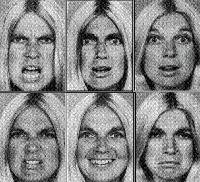
PERSONALITY & THE BRAIN
Rita Carter stated in her book, "The Human Brain," that, "personality is generally agreed to be a group of behavioral characteristics typically exhibited by an individual. Some people display the same behavior in different situations and at different times, while others are much more changeable," (p. 196).
In the human brain, particularly specified patterns of activity have been linked to many various types of personality traits; some of which may also be connected to particular expressions of certain genes or genetic mutations. For instance, an individual who naturally generates plenty of excitatory neurotransmitters may be less prone to seek thrills and excitement; as opposed to an individual who may require plenty of stimulation in order to generally experience an equally average amount of excitement and thrilling stimulation.
PERSONALITY ASSESSMENT
There are many reasons as to why people may conduct a personality test; such as critically determining an individual’s personalized suitability for a particular job or promotion. There is an array of different types of personality assessments that can be optionally utilized in order to determine a person’s individual personality profile. For example, certain type tests such as the Myers-Briggs; generally categorizes people based on the predominance of certain attributes. As opposed to trait tests such as The Big Five, which does not categorize people into types, but instead, draw up a profile based on where they lie along a number of dimensions. And finally, projective test such as the Rorschach inkblot test, basically invite an individual to "reveal" aspects of their own personality by responding accordingly to various different ambiguous inkblot-type stimuli.
THE BIG FIVE (p. 197); uses the NEO-PI rather than MMPI
Identify what the five basic dimensions of personality are; in accordance to The Big Five trait test model depicted below. Then, fill in the blanks with the correct personality trait associated to each of the five basic personality dimensions.
Openness
Extroversion
Conscientiousness
Neuroticism
Agreeableness
Worried
(I.)
_______________
(C.)___________
(A.)___________
Secure
(B.)___________
(D.)____________
(E.)____________
(II.)
________________
Retiring
(F.)____________
(G.)____________
Affectionate
(H.)____________
(I.)_____________
(III.)
______________
(K.)____________
Independent
(L.)____________
(J.)_____________
Prefers Routine
Helpful
(IV.)
_________________
(O.)____________
(M.)____________
Ruthless
(N.)____________
(P.)____________
(Q.)____________
(V.)
_________________
Disorganized
(R.)____________
(S.)____________
Self-Disciplined
(T.)____________
Prefers Variety
Trusting
Weak-willed
Calm
Down-to-Earth
Careful
Self-pitying
Conforming
Imaginative
Suspicious
Insecure
Organized
Reserved
Self-satisfied
Careless
Sociable
Sober
Unhelpful
Fun-loving
Soft-hearted
MYERS-BRIGGS INDICATORS
In the illustration below, please fill in each of the lettered boxes with the correct corresponding personality term from the provided list to best complete the Myers-Briggs Indicator diagram as a whole.
(a.)
(b.)
(c.)
ISTJ
ISFJ
INFJ
INTJ
(g.)
(d.)
ISTP
ISFP
INFP
INTP
ESTP
ESFP
ENFP
ENTP
(h.)
(c.)
ESTJ
ESFJ
ENFJ
ENTJ
(e.)
(f.)
(e.)
v
Extrovert
Judging
Thinking
Intuitive
Feeling
Perceiving
Sensing
Introvert
Identify what the five basic dimensions of personality are; in accordance to The Big Five trait test model depicted below. Then, fill in the blanks with the correct personality trait associated to each of the five basic personality dimensions.
Openness
Extroversion
Conscientiousness
Neuroticism
Agreeableness
Worried
(I.)
_______________
(C.)___________
(A.)___________
Secure
(B.)___________
(D.)____________
(E.)____________
(II.)
________________
Retiring
(F.)____________
(G.)____________
Affectionate
(H.)____________
(I.)_____________
(III.)
______________
(K.)____________
Independent
(L.)____________
(J.)_____________
Prefers Routine
Helpful
(IV.)
_________________
(O.)____________
(M.)____________
Ruthless
(N.)____________
(P.)____________
(Q.)____________
(V.)
_________________
Disorganized
(R.)____________
(S.)____________
Self-Disciplined
(T.)____________
Prefers Variety
Trusting
Weak-willed
Calm
Down-to-Earth
Careful
Self-pitying
Conforming
Imaginative
Suspicious
Insecure
Organized
Reserved
Self-satisfied
Careless
Sociable
Sober
Unhelpful
Fun-loving
Soft-hearted
MYERS-BRIGGS INDICATORS
In the illustration below, please fill in each of the lettered boxes with the correct corresponding personality term from the provided list to best complete the Myers-Briggs Indicator diagram as a whole.
(a.)
(b.)
(c.)
ISTJ
ISFJ
INFJ
INTJ
(g.)
(d.)
ISTP
ISFP
INFP
INTP
ESTP
ESFP
ENFP
ENTP
(h.)
(c.)
ESTJ
ESFJ
ENFJ
ENTJ
(e.)
(f.)
(e.)
v
Extrovert
Judging
Thinking
Intuitive
Feeling
Perceiving
Sensing
Introvert
posted by Dr. Xeno @ 6:31 PM
26 comments